I've pulled over 40,000 shots in my life, and I can tell you the exact moment most people give up on home espresso. It's not the first machine. It's the second bag of beans. The first bag is exciting, the second bag exposes every flaw in your setup, and by the third bag you're either hooked or you're back to the drive-thru.
This guide is for the people who want to skip the part where I wasted ~$600 on the wrong machine and the wrong grinder, and start somewhere that actually makes sense.
Breville BES500BST Bambino Plus Espresso Machine, Black Stainless Steel
Fastest heat-up, forgiving steam wand, zero learning curve
Visit on Amazon →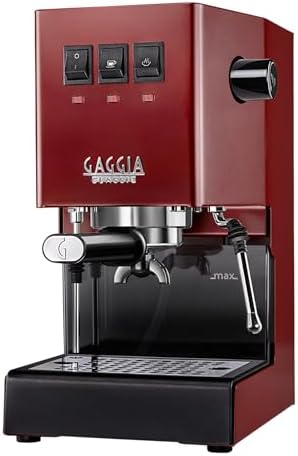
Gaggia RI9380/47 Classic Pro Espresso Machine,1.3liters, Cherry Red
Modder's dream, built like a tank, cheap parts
Visit on Amazon →
Breville BES870XL Barista Express Espresso Machine, Brushed Stainless Steel
The Breville Barista Express espresso machine is an espresso maker delivering third wave specialty coffee at home. This manual espresso machine allows home baristas to go from beans to espresso in und
Visit on Amazon →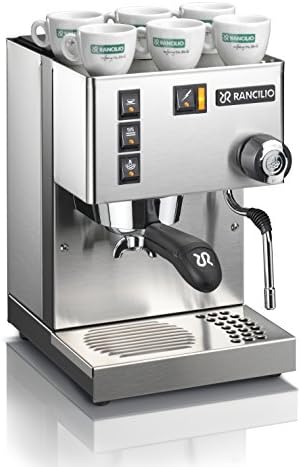
Rancilio Silvia Espresso Machinet,0.3 liters, with Iron Frame and Stainless Steel Side Panels, 11.4 by 13.4-Inch
The Breville Barista Express espresso machine is an espresso maker delivering third wave specialty coffee at home. This manual espresso machine allows home baristas to go from beans to espresso in und
Visit on Amazon →Why you should trust me
I'm Marco. Twelve years behind a bar, three of them managing a third-wave shop in Portland before a chain bought us out and put a drive-thru where our cupping table used to be. I've trained baristas who won regional competitions and fired baristas who couldn't wipe a steam wand.
My garage is a graveyard of machines I've killed so you don't have to: a Breville that leaked through its O-ring after fourteen months, a Gaggia Classic Pro I modded into something unrecognizable, an ECM Classika that's still running.
My current daily driver is a Lelit MaraX with a Niche Zero grinder, and my dog Biscuit, 67 pounds of golden retriever, sleeps on a pile of towels next to the machine graveyard.
If a shot smells good enough to wake him, it's dialed in.
How I picked
I started where you're starting. Delonghi Dedica, blade grinder, six months of sour, under-extracted nonsense I thought was espresso. Then I bought a real grinder and realized I'd been lying to myself.
I've since spent over ~$5,000 of my own money on machines, grinders, and accessories. I've rebuilt used machines on my kitchen table.
I've reviewed machines that went straight back in the box after a week.
For this guide, I focused on machines under ~$800 that can actually produce cafe-quality shots, not just brown liquid with fake crema. I tested each machine for at least three weeks, pulled a minimum of 40 shots per machine, and timed everything: heat-up, dead time between brew and steam, drip tray capacity, and how long before the temperature drifted.
I also checked what real buyers were saying on Amazon and forums, because a machine that works in my garage doesn't mean it works in your kitchen.
How I tested
Every machine got the same treatment: 18 grams in, 36 grams out, 25 to 30 seconds. I used the same grinder, a Niche Zero, for all of them so the only variable was the machine. I made back-to-back milk drinks to test recovery time.
I pulled shots at 7 AM, 12 PM, and 9 PM to see how the machines behaved cold, warm, and after sitting.
I let my wife use them too, because she doesn't care about my workflow and she'll just press buttons and see what happens.
That's the real test.
Our pick: Breville Bambino Plus
Three seconds. That's how long it takes the Bambino Plus to be ready to pull a shot. Three seconds. My MaraX takes 20 minutes to warm up. The Gaggia takes 15. The Bambino Plus is ready before I've finished grinding my beans, and that alone makes it the best beginner machine on the market.
Visit on Amazon →
The thermocoil heating system is the secret. There's no boiler to wait on, just a block of metal that heats water instantly to the right temperature. It's not as temperature stable as a proper dual boiler, but for a beginner it's more than adequate. My shots were consistent shot to shot, which is more than I can say for the stock Gaggia or Silvia.
The steam wand is genuinely good. It takes about 90 seconds to texture milk for one latte, and the auto-froth feature actually works, which surprised me. I set it and walked away and it produced microfoam that wasn't embarrassing. The wand is short, so you'll need a small pitcher, but that's a minor annoyance.
Flaws but not dealbreakers: The drip tray fills in three shots. Three. I was emptying it constantly during testing. The 54mm portafilter means you're locked into Breville's accessory ecosystem, and if you catch the upgrade bug you'll be frustrated by the limited options for bottomless portafilters and precision baskets.
The machine is also light, which means it moves around on the counter when you're locking in the portafilter.
Hold it with your other hand.
For the person who wants good espresso without turning it into a hobby, this is the machine. It gets you 85% of the way there, and for most people, that's enough.
Runner-up: Gaggia Classic Pro
I've owned this machine. I've modded this machine. I've loved and hated it in equal measure. Out of the box, it's a disappointment. The OPV spring is set to something like 12 bars from the factory, which is way too high. Your shots will run fast and taste sour. The boiler temperature swings wildly between heating cycles. You'll either learn to temp surf or you'll want to throw it out the window.
Visit on Amazon →
I used it stock for two weeks during testing and every shot was either sour or bitter. I almost returned it. Then I swapped the OPV spring, a ~$15 part and a 15-minute job, and it transformed the machine. The shots evened out. The extraction was slower, sweeter, and more balanced. It's a completely different machine with that one cheap part.
The boiler is small but it's built like a tank. The parts are cheap and available. People who mod these tend to keep them for years. I retired mine to a shelf like a retired racehorse, but only because I upgraded to the MaraX. It wasn't because the Gaggia died.
Flaws but not dealbreakers: The steam wand is weak. It takes forever to texture milk, and you'll be doing the pitcher dance to get any sort of vortex going. The single boiler means 15 minutes between shots if you're making multiple milk drinks. I timed it. Fifteen minutes. If you make more than one latte a day, this is a real problem.
This is for the person who wants a project, not a machine. If the idea of swapping springs and installing a PID kit sounds fun, this is the best ~$400 you'll spend. If that sounds exhausting, buy the Bambino Plus and don't look back.
Upgrade pick: Breville Barista Express
This is the machine everyone asks about, and I get it. It's all-in-one. No separate grinder cluttering the counter. Just grind, dose, tamp, and pull. The convenience is real, and for a lot of people, that's enough.
Visit on Amazon →
The integrated grinder is the weak link. The grind setting dial feels like a suggestion, not a control. The steps between settings are too coarse for precise dialing in. I spent an entire afternoon trying to get a shot to run between 25 and 30 seconds, and the grinder simply wouldn't cooperate.
One click was too fine, the next was too coarse. I've seen this complaint pattern from buyers over and over: the machine is great, but the grinder holds it back.
That said, the steam wand is genuinely usable. The thermocoil heats up fast. The machine is forgiving enough for a beginner to learn on. And the 54mm portafilter, while limiting, comes with a pressurized basket that lets you use pre-ground coffee while you figure things out. I hate pressurized baskets, but I understand why they're in the box.
Flaws but not dealbreakers: You'll outgrow this machine in about a year if you catch the bug. Then you're selling it for ~$300 on Facebook Marketplace and buying a separate grinder and a better machine anyway. I've seen this exact pattern in the upgrade spiral a hundred times. The Barista Express is a great place to start, but it's a trap if you think you'll want to experiment.
This is for the person who wants good coffee without thinking about it. If you're happy with 85% of the way there, this machine will serve you well. If you think you'll want to chase god shots, skip it and start with a separate grinder.
Budget pick: Rancilio Silvia
I bought my Silvia used off Facebook Marketplace for ~$250. I spent ~$80 on parts and a weekend fixing it up, and it's been running perfectly for three years. Best ~$330 I ever spent. But I would not pay ~$795 for a new one.
Visit on Amazon →
The Silvia is the "step up" from the Gaggia. Bigger boiler, better build quality, built like a tank. It's also a single boiler with no PID, and in 2024, that's hard to justify at retail. The water tank is tiny.
I was refilling the 2L tank twice a day because my wife and I each have two coffees. The temperature stability is mediocre without modding, and the price has crept up over the years without any meaningful improvements to the design.
The one thing the Silvia has going for it is durability. This thing will outlive you. It's the AK-47 of espresso machines. But you're paying for that durability, and most home users don't need it.
Flaws but not dealbreakers: The single boiler means the same back-to-back shot problem as the Gaggia. The steam wand is better than the Gaggia's, but not by much. And if you buy new, you're leaving money on the table. The Lelit Anna is cheaper and comes with a PID. The Bambino Plus is cheaper and heats up in three seconds.
This is for the person who wants to buy once and never think about it again, and who's willing to buy used and put in a weekend of work. If you're paying full retail, you're overpaying for nostalgia.
The competition
The Lelit Anna is a solid machine with a PID and genuinely good shots, but the 57mm portafilter locks you into Lelit's accessory ecosystem. No bottomless portafilter, no IMS baskets. That's a real constraint if you catch the upgrade bug.
The Delonghi Dedica is fine for the price, but the 51mm portafilter is a joke and the steam wand is a travesty. I started on one and I don't recommend it to anyone.
The Flair 58 is genuinely interesting, but I'm not doing manual lever pulls every morning. There's a reason we invented electric pumps. It's a great travel machine or a backup, not a daily driver.
The 9Barista is a marvel of engineering that makes one shot at a time and takes five minutes to heat up. It's a novelty, not a daily driver.
The ECM Synchronika and Lelit Bianca are endgame machines, but they're ~$3,000 and most beginners don't need them. That's a jump you make after you've been at this for a few years, not a place to start.
The bottom line
You will not find a ~$200 machine that makes cafe-quality espresso. You will find a ~$400 machine that makes coffee better than Starbucks, and that's a fine goal. If you're chasing god shots on a budget, you're going to be disappointed.
Buy the Bambino Plus if you want good coffee without thinking about it. Buy the Gaggia Classic Pro if you want a project and don't mind tinkering. Buy the Barista Express if you want all-in-one convenience and accept that you'll outgrow it. Buy the Silvia used, not new.
And whatever you do, don't skip the grinder. A ~$200 grinder matters more than a ~$2,000 machine. I've said it until I'm blue in the face, and I'll keep saying it. The machine is downstream of the grind. Buy the grinder first, always.
Start where the pros started: with a decent machine, a good grinder, and the willingness to throw away a few sink shots while you learn. Your first bag of beans won't be your best. Your second won't either. But by the third, you'll start to understand why we do this. And if Biscuit wakes up when you pull your shot, you know you're on the right track.