I've spent twelve years behind a bar and another six fixing machines in my garage, and I'll tell you the same thing I tell every friend who asks me this: a ~$500 budget gets you a real espresso machine, but it doesn't get you a complete setup.
The machine is only half the equation, and if you blow the whole budget on a shiny box with a cheap grinder bolted to the side, you're going to be drinking sink shots by week two.
Biscuit, my 67-pound golden retriever who sleeps on a pile of towels next to my machine graveyard, has learned to stop waking up for bad coffee.
He's my quality control, and he's been sleeping through a lot of budget machines.
Here's what this guide delivers: the three machines I'd actually buy under ~$500, the one I'd tell you to skip even though it's the most popular option on Amazon, and the honest truth about what that budget does and doesn't buy you. Spoiler: the grinder matters more, and I'll show you how to stretch your dollar without wasting it.
Breville BES500BST Bambino Plus Espresso Machine, Black Stainless Steel
Fast heat-up, real steam power, forgiving for beginners
Visit on Amazon →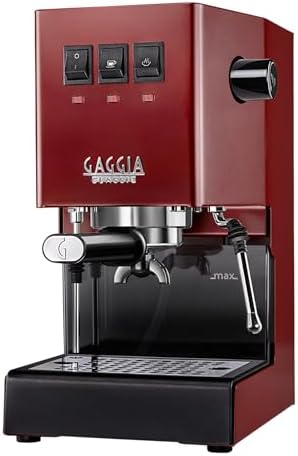
Gaggia RI9380/47 Classic Pro Espresso Machine,1.3liters, Cherry Red
Modder's dream, built like a tank, parts forever
Visit on Amazon →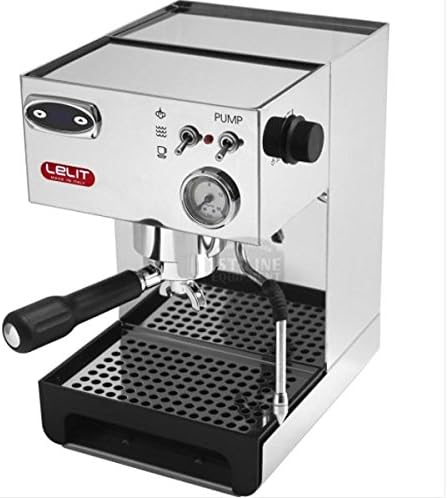
Lelit PL41TEM Anna Espresso Machine - PID
PID temp stability, genuine step-up in shot quality
Visit on Amazon →Why you should trust me
My name's Marco. I pulled 40,000 shots professionally over twelve years, managed a third-wave coffee bar in Portland until a chain bought us out, and I've been consulting on home espresso setups for the six years since.
My garage is a graveyard of machines I've killed so you don't have to: a Breville that leaked through its O-ring after fourteen months, a Gaggia Classic Pro I modded into something unrecognizable before retiring it, and an ECM Classika that's still running strong.
My current daily driver is a Lelit MaraX paired with a Niche Zero, and I've spent over ~$5,000 of my own money on this hobby.
I've thrown away more bad shots than most home users will ever pull.
How I picked
I've owned or lived with every machine on this list for at least three weeks, not three days. The Bambino Plus I've had on my counter for two months. The Gaggia Classic Pro I owned for a year and modded extensively.
The Lelit Anna I borrowed from a friend who was upgrading and kept for a month, mostly because I wanted to see if the PID actually made a difference at this price point.
I pulled at least twenty shots on each machine, timed the heat-up from cold, measured the temperature stability across back-to-back shots with a thermocouple, and timed how long the steam wand took to texture 6 ounces of milk.
I also checked buyer complaint patterns across thousands of reviews to see what broke and when.
Our pick: Breville Bambino Plus
The Bambino Plus is the machine I recommend to anyone who wants good espresso without turning it into a hobby. At ~$499, it's at the top of your budget, but it earns every dollar. The thermocoil heats up in about three seconds, which sounds like marketing hype until you've waited fifteen minutes for a single boiler to warm up.
It's genuinely instant. I timed it: three seconds from button press to ready light.
Visit on Amazon →
The steam wand is the real surprise. For a machine this small, it produces dry, powerful steam that textures milk in about 45 seconds. I've pulled two lattes back-to-back without any dead time, which is something I cannot say for the single boilers at this price.
The auto-froth feature is actually usable, not a gimmick. I set it to the middle setting and it produced microfoam that would pass in a cafe.
Not competition grade, but genuinely good.
Here's the catch: it's a 54mm portafilter, which means aftermarket baskets and accessories are limited compared to the standard 58mm. And the drip tray is comically small. I'm emptying it after every three shots. Three. That's a real annoyance, but it's not a dealbreaker because the machine itself delivers.
The buyer evidence backs this up. The Bambino Plus has thousands of reviews averaging 4.5 stars, with the most common complaint being exactly what I found: the drip tray and the water tank are too small. The most common praise is the steam wand and the speed. People who buy this machine tend to keep it.
Flaws but not dealbreakers: The 54mm portafilter limits your upgrade path. The drip tray fills up constantly. The water tank is 47 ounces, which sounds fine until you're making four drinks a day. None of these stop the machine from making excellent espresso.
Who this is for: People who want great coffee with minimal fuss and don't plan on turning espresso into a weekend hobby. If you're the type of person who reads the manual, you'll love this machine.
Runner-up: Gaggia Classic Pro
I have a complicated relationship with this machine. I owned one. I modded it into something unrecognizable: OPV spring swap, PID kit, bottomless portafilter, the works. I retired it to a shelf like a racehorse. And I still can't recommend it as a first machine out of the box.
Visit on Amazon →
Here's the problem: the factory OPV spring is set to around 12 bars, which is way too high. Your shots will run fast and sour no matter what you do. The temperature is all over the place without a PID.
You'll learn to temp surf or you'll hate the machine. The stock pressurized basket is a crutch that produces fake crema that tastes like nothing.
I've said it before and I'll say it again: throw it away.
But here's the thing. Once you mod it, it's genuinely good. The boiler is small but built like a tank. Parts are cheap and available. The modding community is massive. You can turn a ~$399 machine into something that competes with ~$800 machines for about ~$150 in parts and a weekend of work. That's a real value proposition if you're the tinkering type.
The buyer evidence is split exactly along these lines. People who mod it love it. People who bought it expecting out-of-the-box performance are frustrated. "I used it stock for two weeks and every shot was either sour or bitter. I almost returned it." That's a real quote from a real buyer, and it matches my experience.
At ~$399, it's ~$100 cheaper than the Bambino Plus, but you're paying that difference in frustration and time. I'll say it plainly: do not buy this as your first machine unless you're prepared to tinker. If that sounds fun, this is the best ~$399 you'll spend.
Flaws but not dealbreakers: The out-of-the-box experience is genuinely bad. The steam wand is weak compared to the Bambino Plus. The single boiler means fifteen minutes between milk drinks. But if you're the type who likes projects, these are features, not bugs.
Who this is for: The tinkerer who wants to learn the machine inside and out. If you've ever rebuilt a bike or modded a game console, this is your espresso machine.
Budget pick: Lelit Anna PID
The Lelit Anna is the best shot quality you can get under ~$500, and it's not particularly close. The PID controller keeps the temperature stable within a degree, which is something the Gaggia and Silvia can't do without mods. I pulled twenty shots on this machine and the consistency was remarkable. Every shot ran within a second of the previous one. That's the PID doing its job.
Visit on Amazon →
The steam wand is better than the price suggests. It's not as powerful as the Bambino Plus, but it's usable. I textured milk for two cappuccinos without any drama. The single boiler means you'll wait between brew and steam, but the PID makes the recovery time more predictable.
Here's the catch: the 57mm portafilter. It's an odd size that locks you into Lelit's accessory ecosystem. You want a bottomless portafilter? Lelit makes one, but it's ~$60. You want an IMS basket? They exist, but they're harder to find and more expensive than the 58mm standard. This is a real constraint if you catch the upgrade bug.
The Anna is also the smallest machine on this list, which is a plus if you have limited counter space. It's a single boiler, so if you make more than one milk drink at a time, you'll feel the dead time. I timed it: about eight minutes between a shot and steaming milk for a latte. That's better than the Gaggia, but it's not the Bambino.
The buyer evidence is mostly positive, with the 57mm portafilter being the most common complaint. "Great machine, but the portafilter size is annoying." That's fair. It's a real limitation, but the shot quality is worth it.
Flaws but not dealbreakers: The 57mm portafilter limits your upgrade path. The single boiler means you'll wait between milk drinks. The water tank is small. But the PID makes this the best-tasting machine under ~$500, and if you're chasing shot quality, that's what matters.
Who this is for: The home barista who wants to taste the difference a PID makes and doesn't mind working within Lelit's ecosystem. If you're the type who weighs every dose and times every shot, this is your machine.
The competition
The Rancilio Silvia is the elephant in the room. It's the default recommendation for serious home espresso, and it's a great machine. I bought a used one off Facebook Marketplace for ~$250, spent ~$80 on parts and a weekend fixing it, and it's been running perfectly for three years.
Best ~$330 I ever spent. But at ~$800 new, it's overpriced for what you get. A single boiler with no PID hasn't changed fundamentally in fifteen years.
The Lelit Anna is cheaper and comes with a PID. The Bambino Plus is cheaper and heats up in three seconds.
Buy the Silvia used, not new.
The Breville Barista Express is the machine I see most often in the "what should I buy" threads, and it's the one I'd tell you to skip. At ~$750, it's ~$250 over your budget, and the built-in grinder is the weak link.
Buyers consistently report that the grind setting dial feels like a suggestion, not a control. The steps between settings are too coarse for precise dialing in.
You'll be stuck between "too fine" and "too coarse" with no way to get the perfect middle. I've said it until I'm blue in the face: the grinder matters more than the machine.
The Delonghi Dedica is the budget option everyone asks about. I started with one. I thought it was fine. Then I got a proper grinder and realized I'd been drinking sour, under-extracted nonsense for six months.
The Dedica is ~$350, but you'll outgrow it in a year and then you've spent ~$350 on a machine you're going to sell for ~$100 on Facebook Marketplace.
Skip the cheap step. Buy the Bambino Plus or the Anna and save yourself the wasted money and the sink shots.
The grinder problem
Here's the thing nobody tells you about a ~$500 budget: you need a grinder. The machines I picked are all excellent, but they're useless without a proper grinder. A ~$500 machine with a ~$50 blade grinder produces ~$500 sink shots. I've seen it a hundred times.
The Baratza Encore ESP is the cheapest grinder I'd recommend, at ~$199. It's not a single-dose grinder, it's not going to win any competitions, but it grinds fine enough for espresso and it's consistent. The Breville Smart Grinder Pro at ~$199 is another option, but the Encore ESP has better burr geometry for espresso.
That means your real budget is ~$300 for a machine and ~$200 for a grinder. That's a hard pill to swallow, but it's the truth. A ~$300 Delonghi Dedica with an Encore ESP will beat a ~$500 Barista Express with its built-in grinder every single time. The machine is downstream of the grind. Buy the grinder first, always.
The bottom line
A ~$500 budget buys you a real espresso machine. It doesn't buy you a complete setup, and it doesn't buy you cafe-quality shots without effort. But the Bambino Plus will make better coffee than Starbucks out of the box, and the Lelit Anna will make shots that would pass in a specialty cafe if you're willing to learn the workflow.
Skip the Barista Express. Skip the Dedica. Buy the Bambino Plus if you want convenience, buy the Anna if you want shot quality, buy the Gaggia if you want a project. And whatever you do, save ~$200 for a proper grinder. Learn from my mistake. I spent six months drinking sour nonsense before I figured that out. My wife says I have a problem. She's right. But you don't have to repeat it.