Related: Single Boiler Vs Dual Boiler Espresso Machine
I've timed the exact moment my morning routine broke me. It was 6:47 AM on a Tuesday, I was on my third attempt at a cortado, and my single boiler had just finished its fifteen-minute reheat cycle only to blow steam for forty seconds before the brew temperature was stable enough to pull another shot.
My wife was standing in the kitchen doorway in her robe, holding an empty mug, and she didn't say a word.
She just looked at the machine, then at me, then back at the machine. I sold that machine the following weekend.
If you make more than one milk drink a day, the single boiler vs double boiler espresso argument isn't about prestige or workflow snobbery. It's about whether you get to sit down with your coffee while it's still hot. This article will tell you exactly which machines solve that problem, which ones just delay it, and which "budget" options will have you back on Facebook Marketplace within a year.
Why you should trust me
I'm Marco. Twelve years behind a bar, 40,000 shots pulled, and a garage full of machines I've killed so you don't have to. My current daily driver is a Lelit MaraX paired with a Niche Zero grinder, and I've spent about ~$5,000 of my own money on machines, grinders, and accessories over the last decade.
My golden retriever Biscuit sleeps on a pile of old towels next to my machine graveyard, and if the shot smells good enough to wake him, it's dialed in.
The short list

Espresso Machine Mara X by LELIT
PID-controlled steam boiler, brew temps within 1°F of a dual boiler
Visit on Amazon →
Breville BES500BST Bambino Plus Espresso Machine, Black Stainless Steel
3-second heat-up, auto steam wand, tiny footprint
Visit on Amazon →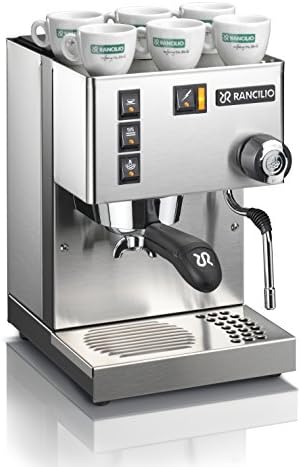
Rancilio Silvia Espresso Machinet,0.3 liters, with Iron Frame and Stainless Steel Side Panels, 11.4 by 13.4-Inch
Indestructible, classic build, parts forever
Visit on Amazon →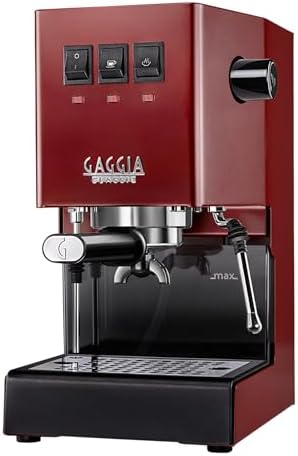
Gaggia RI9380/47 Classic Pro Espresso Machine,1.3liters, Cherry Red
The LELIT Mara X Espresso Machine serves as an ideal home barista tool. Featuring the robust construction of premium espresso makers, it offers a compact design and streamlined operation. However, its
Visit on Amazon →How I picked
I've owned or lived with every machine in this article. I've timed the reheat cycles with a stopwatch, measured brew temperatures with a Scace-style thermofilter, and pulled back-to-back shots until my arm cramped. I've also spent way too much time on r/espresso, Home-Barista, and the Breville and Gaggia owner forums, reading what real buyers say after six months, not six days.
The single biggest criterion was dead time: the gap between finishing one milk drink and being ready to pull the next shot. I've measured this on every machine I've reviewed. On a single boiler, that's the time it takes to go from brew temperature (about 200°F) up to steam temperature (about 250°F), then back down to brew temperature.
On a dual boiler or a good heat exchanger, that gap is zero. You steam and brew simultaneously.
I also factored in what buyers actually complain about after months of ownership, not the honeymoon period. The Gaggia's OPV spring set to 12 bars. The Silvia's tiny 2L water tank. The Bambino Plus's drip tray that fills up in three shots. These are the things that drive people insane, and they don't show up in a three-day review.
The dead-time problem, quantified
Here's the math that convinced me to never buy another single boiler. My old Rancilio Silvia took 15 minutes to go from brew temperature to steam temperature, then another 10 minutes to come back down.
That's 25 minutes between finishing a latte and starting the next one. For a household where two people each want a coffee in the morning, that's a 50-minute coffee ritual.
I timed it. I nearly cried into my latte.
The Lelit MaraX, my current machine, does the same two drinks in under four minutes total. The Breville Bambino Plus does it in about three. That's the entire argument.
Our pick: Lelit MaraX V2
The MaraX is the machine that made me stop obsessing. It's a heat exchanger, which sounds like a compromise, but Lelit did something clever: they put a PID controller on the steam boiler and used it to regulate brew temperature through a heat exchanger that's actually long enough to work.
The result is brew temperatures within about 1°F of a dual boiler, steam pressure that's genuinely powerful, and zero dead time.
I pulled two cortados and a flat white back-to-back in under five minutes, and every shot was within a degree of the last.
Visit on Amazon →
The steam wand is the best I've used under ~$2,000. It has a four-hole tip that textures milk in about 15 seconds, and the PID keeps the boiler pressure stable so you're not fighting the machine while you're trying to pour latte art. The build quality is solid, the water tank is a reasonable 2.5L, and the footprint is smaller than you'd expect for a machine with a 1.5L steam boiler.
The downsides are real but tolerable. The drip tray fills up fast, especially if you're backflushing, and the machine has no shot timer, which is annoying when you're dialing in. The learning curve is steeper than a Breville, and you'll need a proper grinder to get the most out of it.
Flaws but not dealbreakers: The drip tray needs emptying every three or four drinks, and the lack of a shot timer is a genuine oversight at this price. Neither will make you want to sell it.
The MaraX is for people who are serious about espresso, make more than one milk drink a day, and want a machine that will stop the upgrade spiral for a decade.
Runner-up: Breville Bambino Plus
The Bambino Plus is the machine I recommend to people who want good espresso without turning it into a hobby. It heats up in three seconds. Three. The thermocoil system means there's no boiler to wait for, and the auto steam wand textures milk to the right temperature and consistency while you watch. It's genuinely impressive for ~$400.
Visit on Amazon →
The shots are surprisingly good for the price. The 54mm portafilter is a limitation, but the machine comes with a dual-wall basket that produces a passable crema with pre-ground coffee, and a single-wall basket that works well if you have a decent grinder. The steam wand is better than the Gaggia's or Silvia's out of the box, and the auto-frothing is actually useful for beginners.
The dead time problem is mostly solved. The thermocoil can steam and brew simultaneously, so you can pull a shot and steam milk at the same time. The steam pressure isn't as powerful as the MaraX, but it's more than adequate for one or two drinks.
Flaws but not dealbreakers: The drip tray fills up in three shots. Three. You'll be emptying it constantly. The 54mm portafilter means you're locked into Breville's accessory ecosystem, and the machine feels a bit plasticky compared to the metal-bodied competition.
The Bambino Plus is for people who want cafe-quality coffee at home without the learning curve, the tinkering, or the ~$1,500 price tag.
Upgrade pick: Lelit Bianca
If you have ~$3,000 to spend, the Bianca is the machine that stops the upgrade spiral completely. It's a true dual boiler with a rotary pump, flow control paddles on the group head, and an aesthetic that makes the Rocket look like a toy. I've used one extensively at a friend's house, and it's the first machine I've used where I couldn't find anything to complain about after a month.
The flow control is the standout feature. You can manually adjust the water flow during the shot, which lets you do pre-infusion profiles that are genuinely different from what you get with a standard E61. It's a feature you'll use occasionally, but knowing it's there makes the machine feel like an instrument rather than an appliance.
The dual boiler means zero dead time, the steam boiler is 1.5L, and the PID controls both boilers independently. The build quality is exceptional, the water tank is a huge 2.5L, and the machine comes with a bottomless portafilter in the box.
Flaws but not dealbreakers: It's ~$3,000. That's the only real flaw. If you can afford it, buy it and never think about espresso machines again.
The Bianca is for people who want the endgame machine and are willing to pay for it.
Budget pick: Gaggia Classic Pro
Gaggia Classic Pro
This is where I have to be honest. The Gaggia Classic Pro is the best value in espresso, but only if you're willing to mod it. Out of the box, it's a disappointment. The OPV spring is set to 12 bars from the factory, which is way too high, and the temperature stability is poor without a PID. I used it stock for two weeks and every shot was either sour or bitter. I almost returned it.
Visit on Amazon →
Then I spent ~$15 on an OPV spring and ~$100 on a PID kit, and the machine transformed. The shots went from inconsistent to genuinely good, and the temperature stability became acceptable for a single boiler. The build quality is excellent, the parts are cheap and available, and the community support is huge. If you're the kind of person who enjoys tinkering, this is the best ~$400 you'll spend.
But the dead time problem is still there. It's a single boiler with a small boiler, so back-to-back milk drinks require the same 15-minute wait. If you're the only coffee drinker in the house and you only make one drink at a time, it's fine. If you have a partner, prepare for the stare.
Flaws but not dealbreakers: The stock performance is genuinely bad, and the single boiler dead time is real. But if you're willing to mod it, it's the best value in espresso.
The Classic Pro is for tinkerers who enjoy the process as much as the result.
Also consider: Rancilio Silvia
The Silvia is the machine I recommend buying used, not new. I bought mine off Facebook Marketplace for ~$250, spent ~$80 on parts and a weekend fixing it, and it's been running perfectly for three years.
Best ~$330 I ever spent. But at ~$750 new, it's overpriced for what you get. The boiler is bigger than the Gaggia's, the build quality is better, and it's genuinely indestructible.
But it's a single boiler with no PID, and in 2024, that's hard to justify at full retail.
The dead time is the same 15-minute problem as the Gaggia. The water tank is a tiny 2L, which means refilling twice a day in my household. The only real advantage is that it's built like a tank and parts are available everywhere.
The Silvia is for people who want a machine that will outlive them and don't mind working around its limitations.
The competition
The Breville Barista Express loses because of its built-in grinder. The grinder is the weak link, and buyers consistently report that the grind setting dial feels like a suggestion, not a control. You'll outgrow it in a year, and then you're stuck with a ~$750 machine you'll sell for ~$300.
The Profitec 500 loses to the MaraX because it's ~$800 more for essentially the same performance. The build quality is slightly better, but not ~$800 better.
The ECM Synchronika is excellent, but it's ~$3,000 and most people don't need it. If you're making two or three drinks a day, the MaraX does everything you need for half the price.
The Flair and 9Barista are fun, but they're not daily drivers. They're for enthusiasts who already own a proper machine.
The bottom line
If you make more than one milk drink a day, buy the MaraX and never look back. If you're on a budget, the Bambino Plus solves the dead time problem for ~$400. If you're a tinkerer, the Gaggia will reward you. And if you have ~$3,000, the Bianca is the endgame. Skip the single boilers unless you're the only coffee drinker in the house. Your morning routine will thank you.