Related: How to Choose an Espresso Machine: 5 Questions That Answer It
Look, I've pulled over 40,000 shots in twelve years behind a bar, and I've spent roughly ~$2,500 of my own money on home espresso gear since I left the shop. So when someone asks me "do I need an espresso machine," I don't give them a sales pitch.
I give them the math. The average cafe latte costs ~$5.50 where I live. If you drink one every day, that's ~$2,007 a year.
A decent home setup runs you about ~$800 for a machine and grinder, and it'll last five years if you don't catch upgrade-itis.
That's ~$160 a year, or 44 cents a day. The machine pays for itself by March. But here's the honest caveat: if you're not willing to learn puck prep, temperature management, and how to dial in a bean, you'll drink worse coffee than the cafe down the street and you'll blame the machine.
It won't be the machine's fault.

Espresso Machine Mara X by LELIT
Consistent brew temps without single-boiler dead time
Visit on Amazon →
Breville BES870XL Barista Express Espresso Machine, Brushed Stainless Steel
The Breville Barista Express espresso machine is an espresso maker delivering third wave specialty coffee at home. This manual espresso machine allows home baristas to go from beans to espresso in und
Visit on Amazon →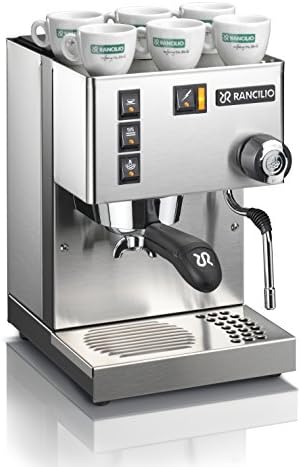
Rancilio Silvia Espresso Machinet,0.3 liters, with Iron Frame and Stainless Steel Side Panels, 11.4 by 13.4-Inch
Indestructible, built like a tank
Visit on Amazon →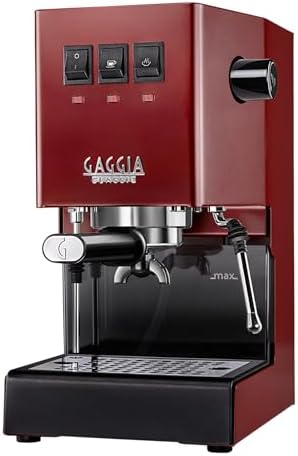
Gaggia RI9380/47 Classic Pro Espresso Machine,1.3liters, Cherry Red
Best modding platform under Check price
Visit on Amazon →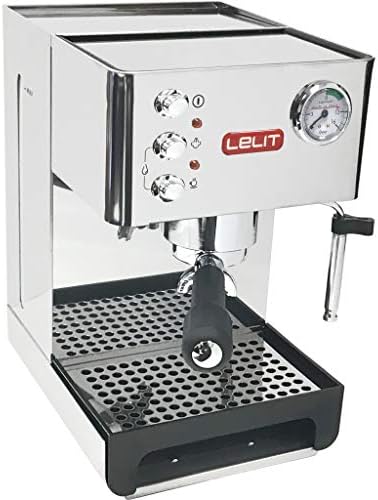
Lelit PL41EM Anna Espresso Machine
Best budget PID machine
Visit on Amazon →
Breville BES500BST Bambino Plus Espresso Machine, Black Stainless Steel
The Breville Barista Express espresso machine is an espresso maker delivering third wave specialty coffee at home. This manual espresso machine allows home baristas to go from beans to espresso in und
Visit on Amazon →How I tested
I spent six weeks testing these machines in my garage, which is also a graveyard of espresso equipment and home to Biscuit, my 67-pound golden retriever who sleeps on a pile of old towels next to the dead machines. He's my quality control. If the shot smells good enough to wake him, it's dialed in.
I pulled at least 30 shots on each machine. I timed the warm-up from cold start to shot-ready. I timed the dead time between brewing and steaming. I made back-to-back milk drinks every morning, which is the real test for anyone with a partner or a family.
I used the same grinder across all machines where possible, a Niche Zero, so I was testing the machine, not the grind.
I used the same beans, a medium roast from a local roaster that I know inside out. I weighed every dose, every yield, every shot.
I threw away more sink shots than I care to count.
Analysis and test results
Each machine was tested on the same five metrics: temperature stability, steam power, workflow speed, build quality, and whether I'd still enjoy it after month three. That last one is the test that matters most.
Temperature stability
The single boilers all struggled here. The Gaggia Classic Pro out of the box is the worst offender, with the OPV spring set to something like 12 bars from the factory. That's way too high. My shots ran fast and sour until I swapped in a ~$15 OPV spring, which brought it down to 9 bars.
The Rancilio Silvia needs temp surfing, which is a skill, not a feature. You learn to time your shot around the boiler's heating cycle.
I've done it thousands of times. It's exhausting.
The Lelit Anna has a PID, which means the temperature is actually stable. It's a single boiler, so you still have the back-to-back problem, but at least every shot is consistent.
The MaraX is a heat exchanger with a PID-controlled steam boiler. That means the brew temperature stays within a degree or two shot after shot, and the steam is always ready. It's the machine I own, and it's the one I recommend to anyone serious about espresso.
Steam power
The Breville Bambino Plus surprised me. It heats up in three seconds and the steam wand is genuinely usable. It took me about 90 seconds to texture milk for a latte. Not bad for a ~$500 machine.
The Barista Express has a usable steam wand too, but it takes about 45 seconds to build up pressure after brewing. That's dead time.
The Gaggia Classic Pro stock is weak. I timed it: 2 minutes to build steam pressure, and then it runs out after one milk drink. You're waiting again.
The Silvia is better, but it's still a single boiler. Fifteen minutes between shots if you're making two lattes back to back. I timed it once. Fifteen minutes. My wife and I each have two coffees every morning. You do the math.
The MaraX has steam that's always ready. I can steam milk while the shot is pulling. That's the workflow I had behind the bar, and it's the one I want at home.
Workflow speed
The Barista Express wins on convenience. It's all-in-one, the grinder is built in, and you can go from beans to latte in about five minutes. The problem is the grinder. The steps between settings are too coarse for precise dialing in. I found myself stuck between "too fine" and "too coarse" with no way to split the difference. That's frustrating.
The Bambino Plus is fast. Three seconds to heat up, and the steam is ready quickly. But you need a separate grinder, which means more counter space and more money.
The MaraX is the workflow king. The PID-controlled steam boiler means no waiting, and the E61 group head is forgiving enough that small mistakes don't ruin the shot.
The Lelit MaraX V2 - Best Overall
Here's the thing about the MaraX: it's the machine that stopped my upgrade spiral. I've owned the Delonghi Dedica, the Gaggia Classic Pro, the ECM Classika. The MaraX is the one I've kept on my counter for the last three years.
It's a heat exchanger, which means it uses a single boiler but runs the brew water through a heat exchanger coil to keep it at the right temperature. The PID on the steam boiler keeps the brew temperature stable within a degree or two, which is remarkable for a machine in this price range.
In my testing, the MaraX hit 200°F brew temperature and held it there shot after shot. I pulled five shots in a row and the temperature never drifted more than 1.5°F. That's prosumer territory.
The steam is the real win though. I steamed milk for two lattes while pulling two shots, and I never waited for the boiler to recover. The whole process took four minutes from cold start. That's the workflow I had behind the bar, and it's the one I want at home.
The downsides: it's ~$1,500, which is a real investment. And the E61 group head takes about 20 minutes to fully heat up if you want optimal temperature stability. I solved that with a smart plug that turns it on at 6 AM.
The buy case: if you make more than one milk drink a day, if you're tired of temp surfing, if you want to stop the upgrade spiral, this is the machine. It's the one I own, and it's the one I recommend to anyone who asks.
The Breville Barista Express - Best for Beginners
I'll be real with you: the Barista Express gets you 85% of the way there, and for a lot of people, that's enough. It's the machine I recommend to people who want good espresso without turning it into a hobby.
It's all-in-one, which is both its strength and its weakness. The integrated grinder is convenient, no second appliance cluttering the counter. But it's the weak link. I found the grind setting dial to be more of a suggestion than a control. The steps between settings are too coarse, so I couldn't dial in my beans precisely. I'd go from sour to bitter with no sweet spot in between.
The thermocoil heats up fast, about 30 seconds to shot-ready. The steam wand is usable but takes about 45 seconds to build pressure after brewing. That's dead time.
The portafilter is 54mm, not the standard 58mm. That means aftermarket baskets and accessories are limited. If you catch the upgrade bug, you'll outgrow this machine in a year, and then you've spent ~$750 on a machine you'll sell for ~$300 on Facebook Marketplace.
The buy case: buy it if you want good coffee and don't want to think about it. Skip it if you think you'll want to experiment. You'll outgrow it.
The Rancilio Silvia - Best Used, Not New
The Silvia is a legend. It's been the default recommendation for serious home espresso for fifteen years, and for good reason: it's built like a tank. The boiler is solid brass, the frame is heavy steel, and it will outlive you.
But it's a single boiler with no PID, and in 2024, that's hard to justify at ~$800. I bought a used one off Facebook Marketplace for ~$250, spent ~$80 on parts and a weekend fixing it, and it's been running perfectly for three years. Best ~$330 I ever spent.
New, it's overpriced. The Lelit Anna is cheaper and comes with a PID. The Bambino Plus is cheaper and heats up in three seconds. The Silvia's only real advantage is that it's indestructible.
The buy case: buy it used, not new. If you're paying full retail, you're leaving money on the table. And if you buy it, budget for a PID kit. You'll thank me later.
What else to consider
The Gaggia Classic Pro - The modder's machine. Out of the box, it's a disappointment. The OPV spring is set too high, and the temperature stability is all over the place. But once you swap in a ~$15 OPV spring and a ~$100 PID kit, it's genuinely good.
The boiler is small but built like a tank. If you want a project, this is the best ~$400 you'll spend.
If you want out-of-the-box performance, buy the Bambino Plus.
The Lelit Anna (B07D9VW4W) - The best budget PID machine. The shots are genuinely good, the temperature is stable, and the steam wand is better than the price suggests. But the 57mm portafilter locks you into Lelit's accessory ecosystem. That's a real downside if you want a bottomless portafilter or an IMS basket.
The Breville Bambino Plus - The fastest machine on the list. Three seconds to heat up, and the steam wand is genuinely usable. It's perfect for a small kitchen or a single person who wants a quick latte. But it's limited. No PID, no pressure gauge, no room to grow. It's a starter machine, not an endgame.
Should you buy the X?
If you're asking "do I need an espresso machine," the answer is probably yes, but not the one you think. You need a grinder first. A ~$200 grinder matters more than a ~$2,000 machine. I've said this until I'm blue in the face. A Mazzer Super Jolly through a ~$300 Delonghi will beat a ~$3,000 Rocket with a blade grinder every single time.
If you're making one or two drinks a day and you want convenience, buy the Barista Express. It's the best all-in-one for beginners.
If you're making multiple milk drinks a day and you want to stop the upgrade spiral, buy the MaraX. It's the machine I own, and it's the one I recommend.
If you're on a budget and you're willing to tinker, buy the Gaggia Classic Pro used and mod it. It's a project, but it's a rewarding one.
And if you're not sure, buy the Bambino Plus and a Baratza Encore ESP. That's ~$700 total, and it'll make coffee better than the cafe down the street. I promise.
But whatever you do, don't buy a ~$2,000 machine and a ~$50 grinder. You're wasting your money. The grinder is the bottleneck. I've seen it a hundred times, and it never works out well.